Hey tennis goddess! Sign up to our smashing newsletter & get 10% off plus exclusive access to our award-winning courtwear collection. Game, set, chic!
Courts & Castles: The Regal History of Tennis
By EXEAT Team
Hidden within Europe’s palaces and castles are royal tennis courts where the game once echoed through gilded galleries. These were places of ceremony and seduction, where queens and courtiers played as intently as kings, and where the sport itself became a mirror of power, fashion, and style.
Hampton Court Palace, England
No history of tennis is complete without Hampton Court Palace tennis. Built in 1529 for Cardinal Wolsey and later seized by Henry VIII, its court became the Tudor stage for the “sport of kings.” In 1625, Charles I ordered renovations, and during the Restoration in 1660, Charles II added the roof and galleries that still stand today.
In modern times, Hampton Court has hosted the Ladies’ Real Tennis World Championship. Champions like Penny Lumley and Claire Fahey have carried the women’s game into this historic arena, proving that the queens of today dominate where kings once played.
Versailles, France
The Versailles tennis court, or Salle du Jeu de Paume, was built in the 1680s under Louis XIV. Here, aristocrats flocked to watch matches beneath painted ceilings, and Marie Antoinette is said to have enjoyed play in the palace gardens.
On 20 June 1789, the court witnessed the dramatic Tennis Court Oath, when France’s deputies vowed not to disband until they had a constitution. Once a royal playground, Versailles’ court became the birthplace of democracy.
Fontainebleau, France
The magnificent Fontainebleau tennis court was commissioned by François I in the early 16th century. It became a Renaissance playground for queens and courtiers, where every rally was both spectacle and intrigue. Today, the restored court is still in use, making it one of the oldest active courts in the world.
Holyrood Palace, Scotland
At Holyrood Palace in Edinburgh, the fiery Mary, Queen of Scots made tennis part of her legend. In 1567, she scandalised her court by playing in men’s breeches while still in mourning for her husband, Lord Darnley. For Mary, tennis was more than recreation, it was rebellion.
St James’s Palace, England
By the late 16th century, St James’s Palace in London had become another hub of royal tennis. Tudor and Stuart monarchs played while noblewomen filled the galleries to gossip and wager. Though sadly the court has vanished, it is said that the thud and thwack of ghostly tennis balls can sometimes be heard echoing around the halls.
The Louvre, Paris
Few know that before it became the world’s most famous museum, the Louvre Palace boasted jeu de paume courts. By the 17th century, Paris had over 250 courts, frequented by men and women alike. For noblewomen, to be seen at a match was as vital as the play itself, a chance to showcase elegance, wit, and daring.
The Legacy of Queens
From Mary, Queen of Scots tennis at Holyrood to Marie Antoinette at Versailles, women have always been part of the game’s heritage. In modern times, players like Penny Lumley and Claire Fahey continue the tradition in absolutely smashing form.
A Lineage That Lives On
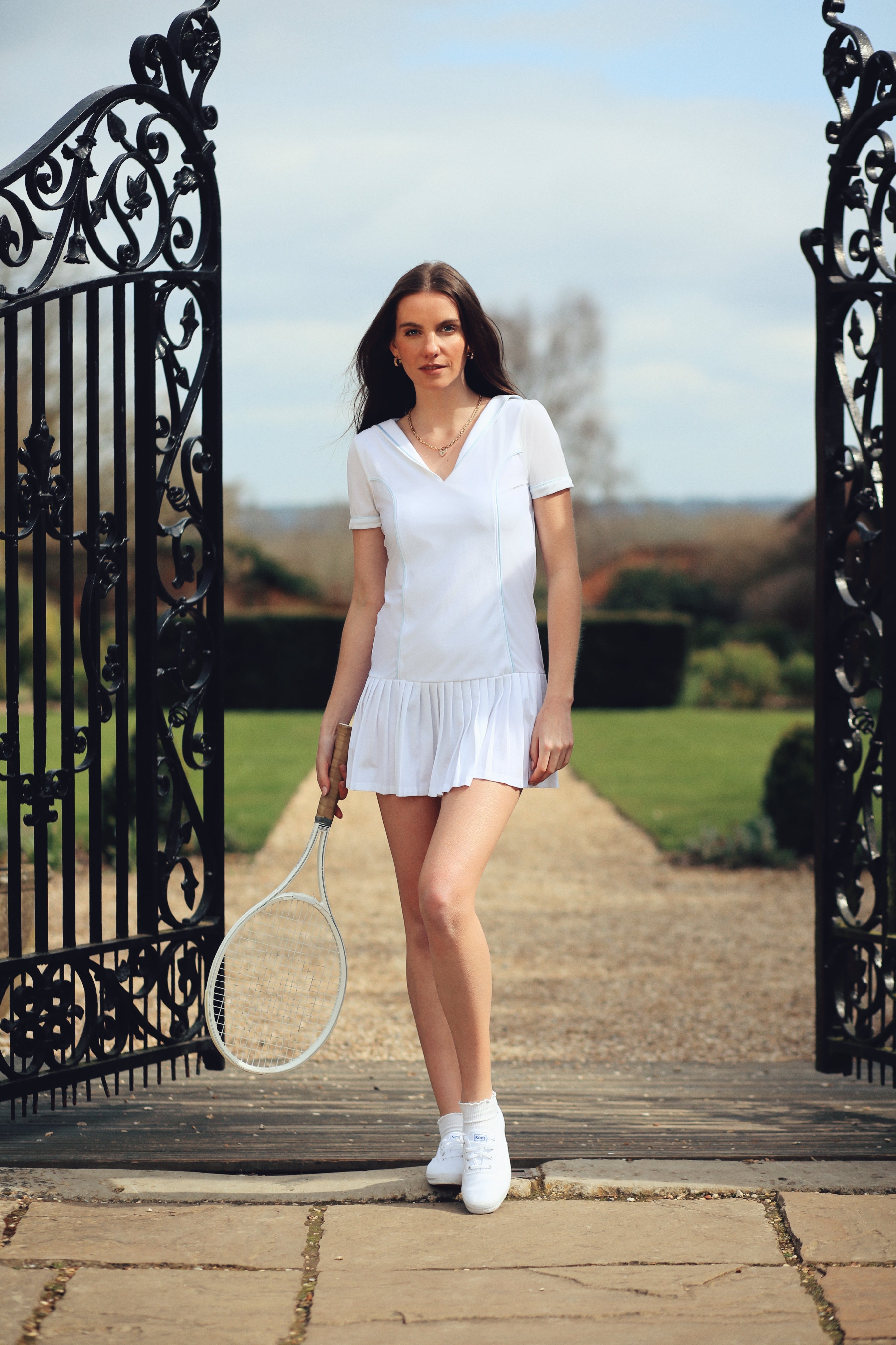
From Tudor palaces to Parisian courts, the history of tennis in palaces is a tale of glamour, power, and play. Today, when you step onto court in an EXEAT dress, you carry that heritage with you. Our silhouettes are cut as flatteringly as a royal portrait, our pleats as precise as a palace gate, and our fabrics as forward-thinking as the queens who defied convention.
Because while kings may have built the courts, it is the queens who continue to rule them.